Every job below is one we do ourselves across Bremerton.
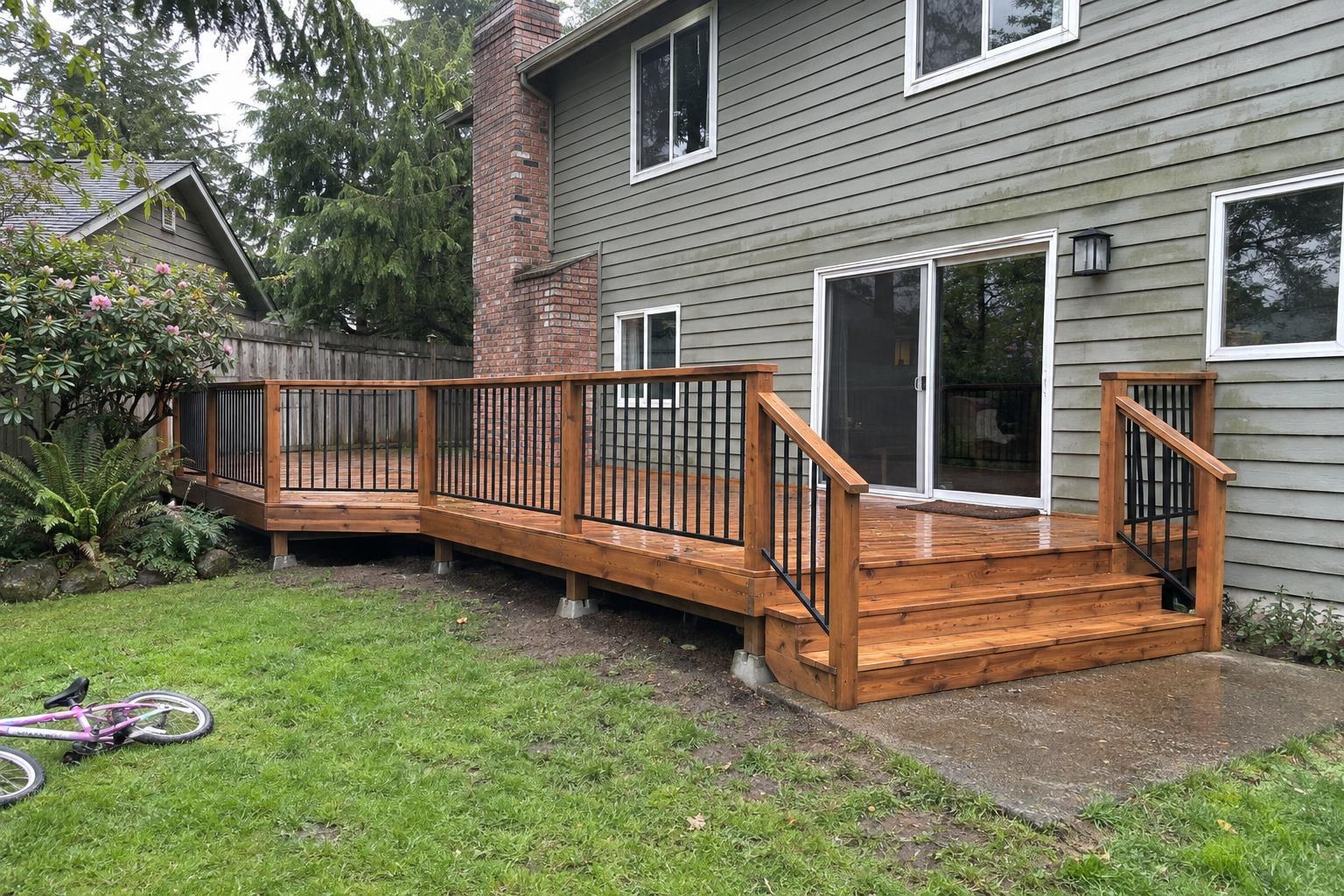
We set footings below the frost line, usually 18 inches down in this soil, and bolt the ledger board to the house with flashing so water can't get behind it. Joists go in at 16 inches on center so the decking doesn't bounce underfoot. You pick pressure-treated lumber, cedar or composite boards for the surface.
Most repair calls start with a soft spot in the decking or a rail post that's gone loose at the base. We check the ledger board first, that's where rot usually starts if the flashing failed, then work out from there. Sometimes it's a few boards, sometimes we're sistering joists.
We pressure wash first and let the wood dry out for a couple of days before any stain goes on, otherwise it just seals in moisture. Oil-based stains soak in deeper and hold up better against our wet winters than a film-forming product. Plan on recoating every two to three years depending on sun exposure.
If you want a second level off an upstairs slider, a built-in bench along the rail, or stairs that land somewhere other than straight into the yard, we draw it out before we order lumber. We check span tables for the actual load, not just what looks right. Changes are cheap on paper and expensive once the joists are already up.
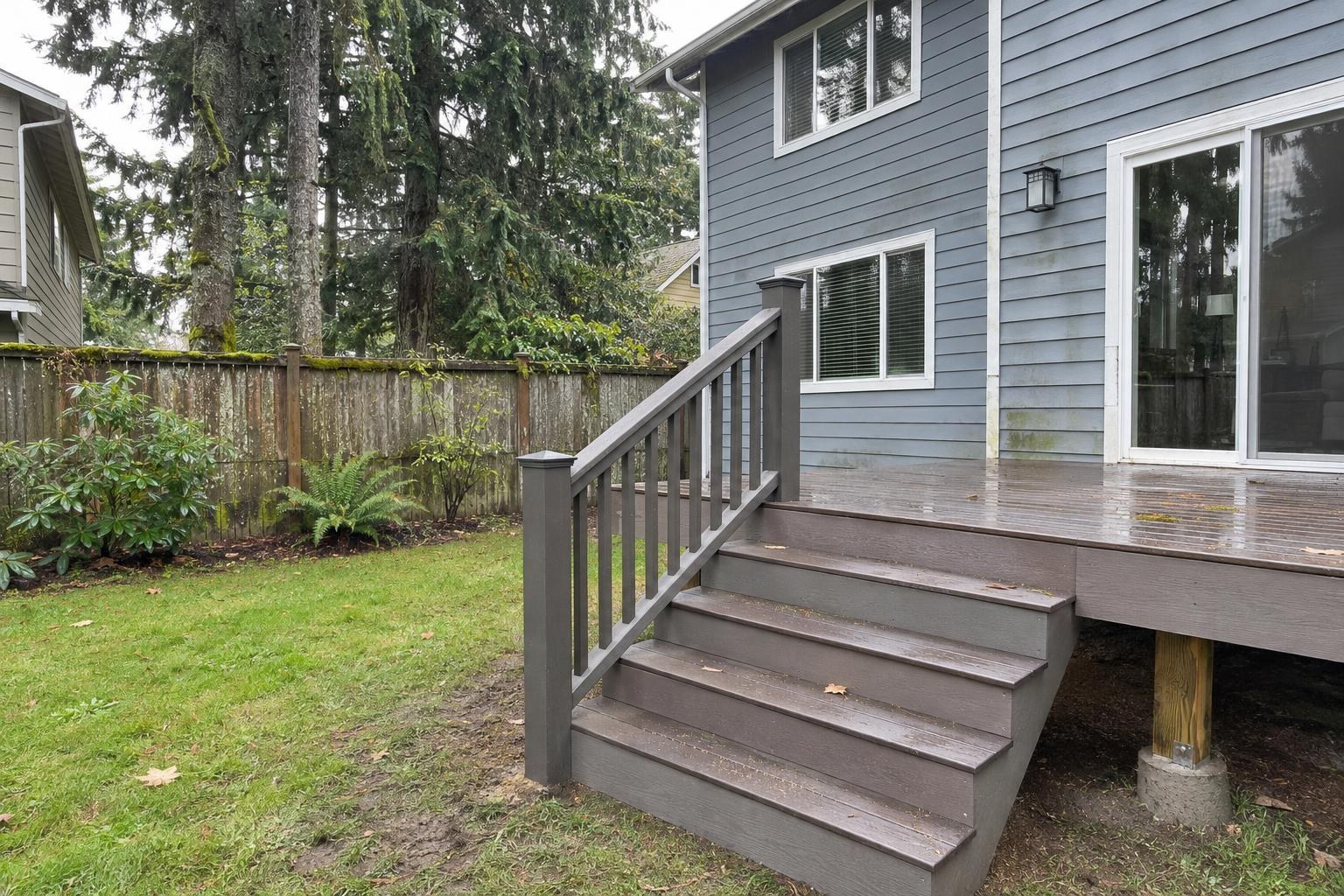
Composite boards use a hidden fastener system so there's no screw heads showing on top. It doesn't splinter and you're not staining it every couple of years, but it does run hotter underfoot in direct sun than wood. We'll tell you straight if composite is worth the extra cost for your situation or if cedar makes more sense.
Building code calls for balusters spaced so a 4 inch sphere can't pass through, and a lot of older decks don't meet that anymore. We reset posts that have rotted at the base, usually where they meet the rim joist, and re-tension or replace cable railing that's gone slack. Loose rails are usually a sign the post itself needs attention, not just the rail cap.
Cupped or warped boards usually mean water's been sitting on top longer than it should, or the gap between boards was too tight to begin with. We pull the bad boards and replace them without tearing into the frame underneath, as long as the joists are still sound. Matching old cedar to new takes a season or two to weather even.
Connecting two deck levels means getting the stringers and landing right so the stairs don't feel off. We frame each level separately and tie them back to the house and to each other so there's no give where they meet. More framing means more spots for water to get trapped, so flashing details matter even more here.
We tear out the old deck down to the ledger and take a hard look at what's underneath before building anything new. Half the time the old footings aren't deep enough or the ledger's rotted out, and that changes the whole plan. Old lumber and hardware get hauled off, you don't deal with the dumpster.
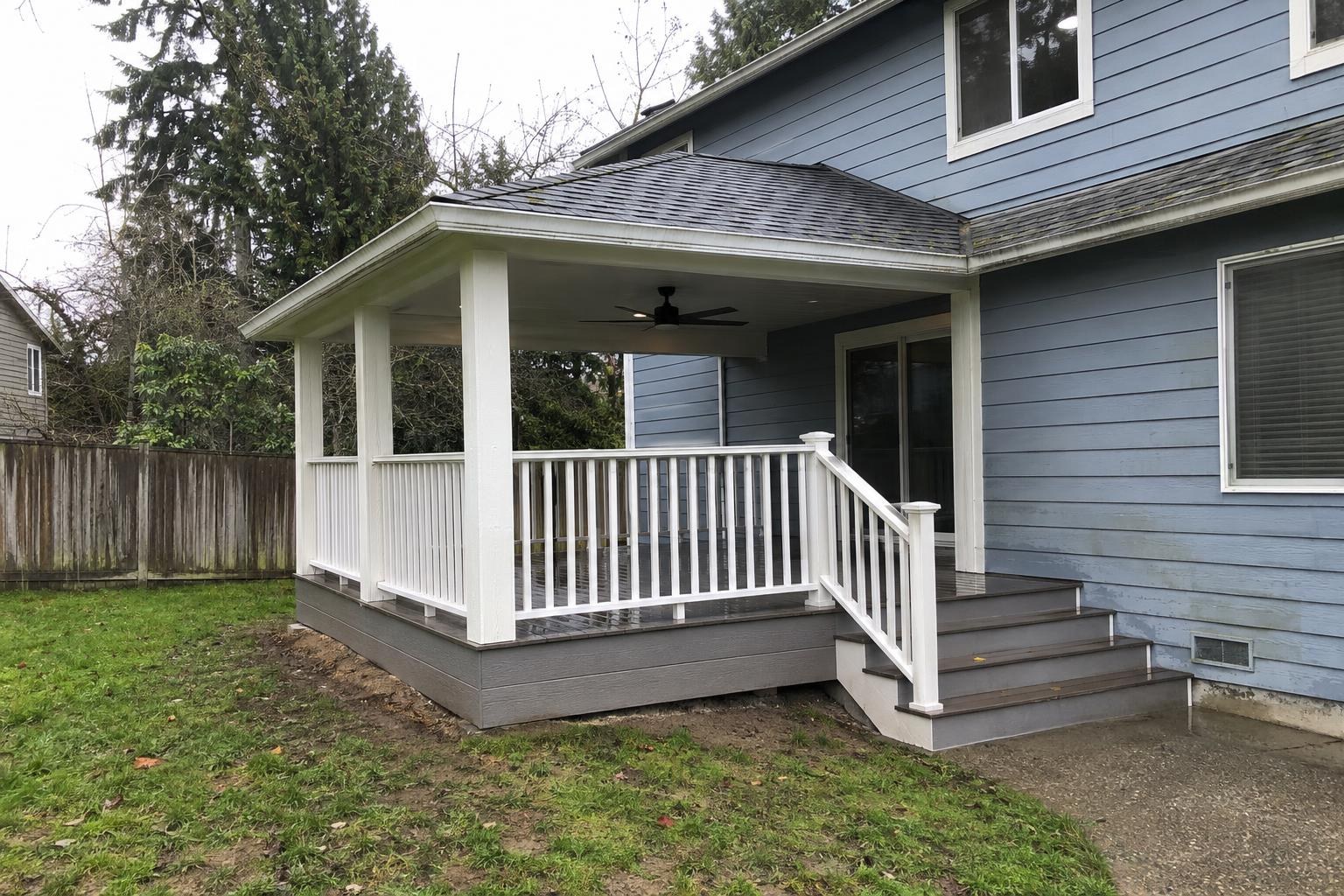
A pergola or roof over an existing deck adds real load, posts need their own footings, not just toenailed into the decking. We tie rafters back to the house framing, not just the deck surface, so it holds up in wind. Covered decks also change how water sheds off the house, so we rework the flashing where the new roof ties in.
Four steps, and no surprises in any of them.
You tell us what you want doing, we look at what is actually there, and we ask the awkward questions early.
In writing, itemised, free. If something might add cost later we flag it now rather than at the end.
Same crew throughout. We cover your floors, keep the dust down and tidy up before we leave each day.
You point out anything you are not happy with and we fix it before the invoice, not after.
Deck work available throughout this part of Kitsap County.
What to expect once a deck project is underway.
Describe the problem and we will tell you what it probably is. No obligation.